NATO Chiefs Meet to Discuss Weapons Production Urgency
NATO military chiefs convened in Brussels to address the urgent need for increased weapons production amid the ongoing war in Iran, which has already cost the US military over $29 billion. Led by Supreme Allied Commander Europe General Alexus G. Grynkewich, the meeting focused on the implications of rapid munitions consumption on NATO's collective capabilities, particularly as the conflict strains supply chains and threatens the timely delivery of US defense systems to European allies.
Germany's Emissions Flatline Threaten 2030 Climate Goals
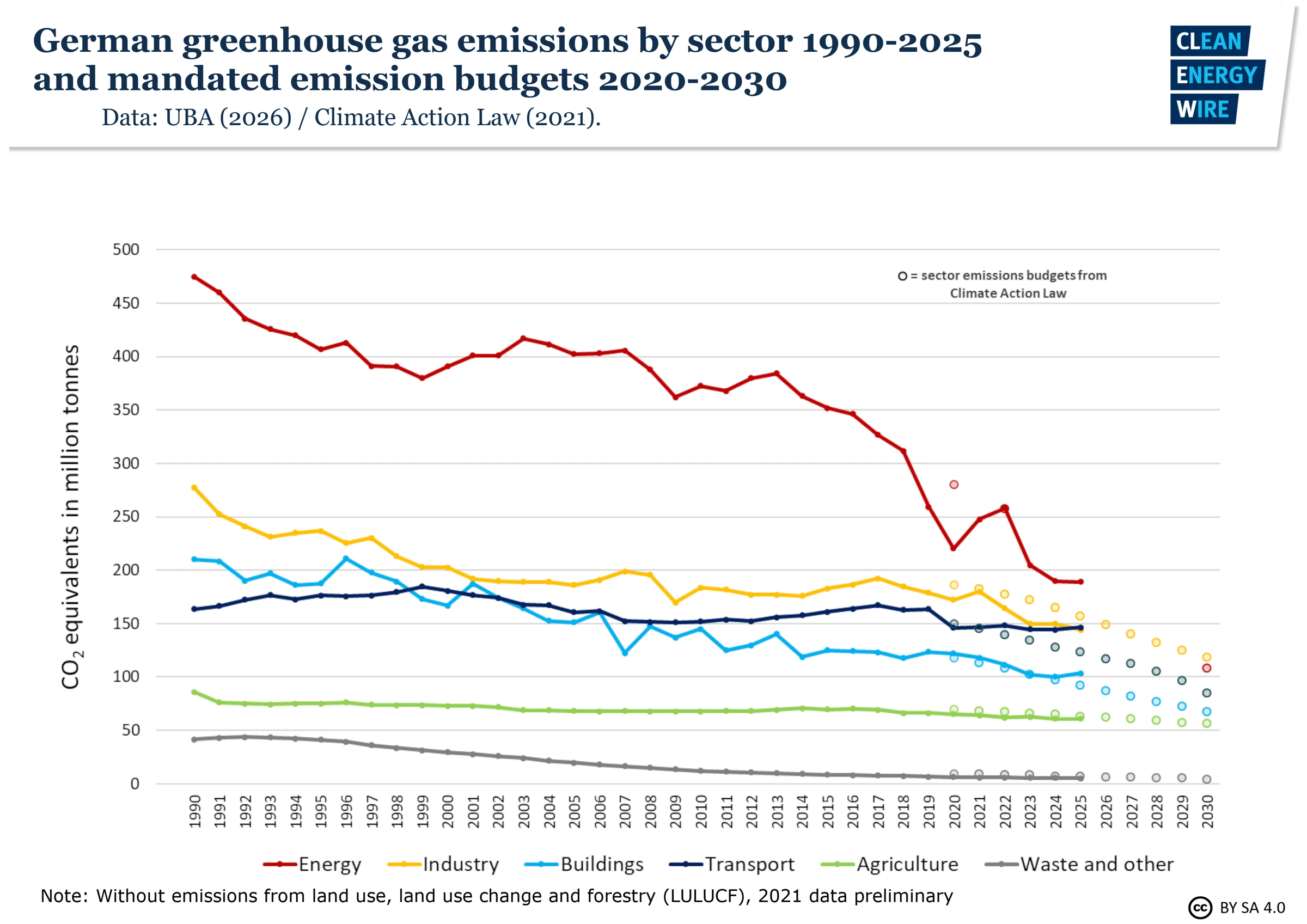
Germany's emissions have flatlined, raising concerns that the country will miss its legally binding 2030 target to reduce greenhouse gas emissions by 65% compared to 1990 levels, according to a report from the Council of Experts on Climate Change. The advisory group warned that emissions could exceed the target by up to 100 million tons of CO2, citing insufficient measures in the government's €8 billion climate action plan unveiled in March. Despite the environment ministry's insistence that the goal remains achievable, experts argue that current projections underestimate emissions, particularly in the buildings and energy sectors.
Meloni threatens Italy's exit from EU rearmament programme
Italian Prime Minister Giorgia Meloni has threatened to withdraw Italy from the EU's €150 billion SAFE rearmament programme unless the European Commission extends fiscal 'escape clause' measures to include energy spending. In a letter to Commission President Ursula von der Leyen, Meloni argued that Europe’s security should encompass economic stability and the ability to manage rising energy costs, linking these issues to the ongoing turmoil in the Middle East and the effects of Russia's war in Ukraine. The European Commission has rejected Italy's request for more lenient budget rules, urging member states to utilize existing resources to address the energy crisis.
Sánchez's Socialists Face Historic Defeat in Andalusia
Spain's Prime Minister Pedro Sánchez's Socialist Party suffered a historic defeat in the Andalusian regional elections, winning only 28 of the 109 parliamentary seats, down from 30, while the conservative People's Party (PP), led by Juanma Moreno, secured 53 seats but fell short of a majority. This election marks a continuation of poor results for the Socialists, who have lost ground in three previous regional contests, and positions the far-right Vox party as a potential kingmaker for the PP, which may need their support to govern. The outcome raises concerns for Sánchez ahead of the anticipated general election in 2027.