Rova-T shows promise in small cell lung cancer trial
A phase I clinical trial has shown that Rovalpituzumab tesirine (Rova-T), a DLL3-targeted antibody-drug conjugate, achieved an 18% objective response rate among 60 patients with recurrent small cell lung cancer (SCLC), with a median progression-free survival of 2.8 months. The trial, conducted across 10 cancer centers in the United States, indicated that patients with high DLL3 expression had a significantly better median progression-free survival of 4.3 months compared to 2.2 months for those with low DLL3 expression. Lead study author Charles M. Rudin from Memorial Sloan Kettering Cancer Center noted that the promising responses were primarily observed in patients with high DLL3 levels.
Student Creates Solar-Powered Sling for Newborn Jaundice
A student has developed a low-cost baby sling that utilizes sunlight to treat newborn jaundice, addressing a critical need in areas lacking electricity and medical equipment. This innovative solution aims to improve the management of this common condition, which is characterized by a yellowish discoloration of the skin and eyes in newborns.
Researchers Use Genomics to Revive American Chestnut Tree
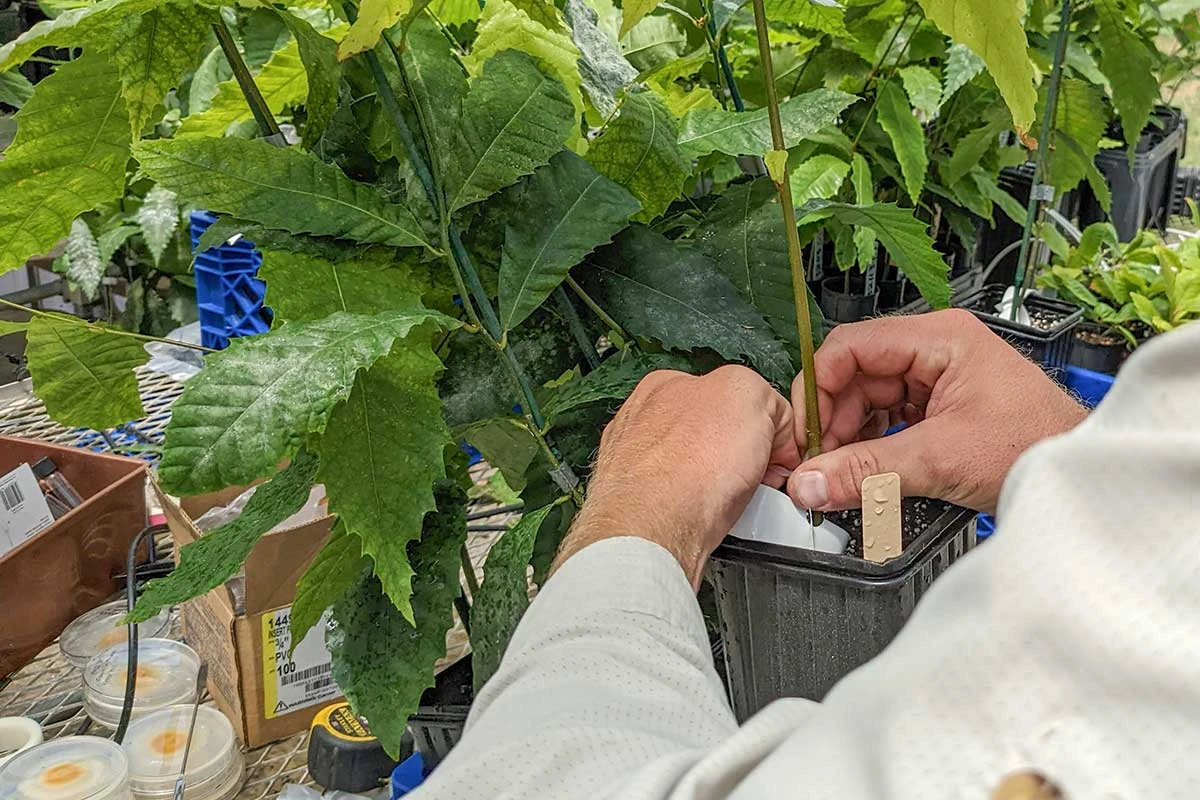
Researchers from the American Chestnut Foundation are employing advanced genomic techniques to revive the American chestnut tree, which has been functionally extinct in its native range due to invasive fungal pathogens that have killed an estimated 3 billion trees. A recent study published in Science outlines efforts to identify disease-resistant traits through hybrid breeding with Chinese chestnuts and the development of genetically modified trees that can resist blight, leveraging insights from high-resolution genome assemblies. These initiatives aim to restore the American chestnut to its historical ecosystems in the Appalachians.
Astronomers Discover Unusual Four-Planet System
Astronomers led by Assistant Professor Tom Wilson at the University of Warwick have discovered an unusual four-planet system orbiting the red dwarf star LHS 1903, located 116.3 light-years away. The system features a rocky planet, LHS 1903e, at its outer edge, challenging existing models of planet formation that typically place rocky planets closer to their stars. This finding suggests that the planets may have formed sequentially in a gas-depleted environment, rather than simultaneously, providing new insights into planetary dynamics.