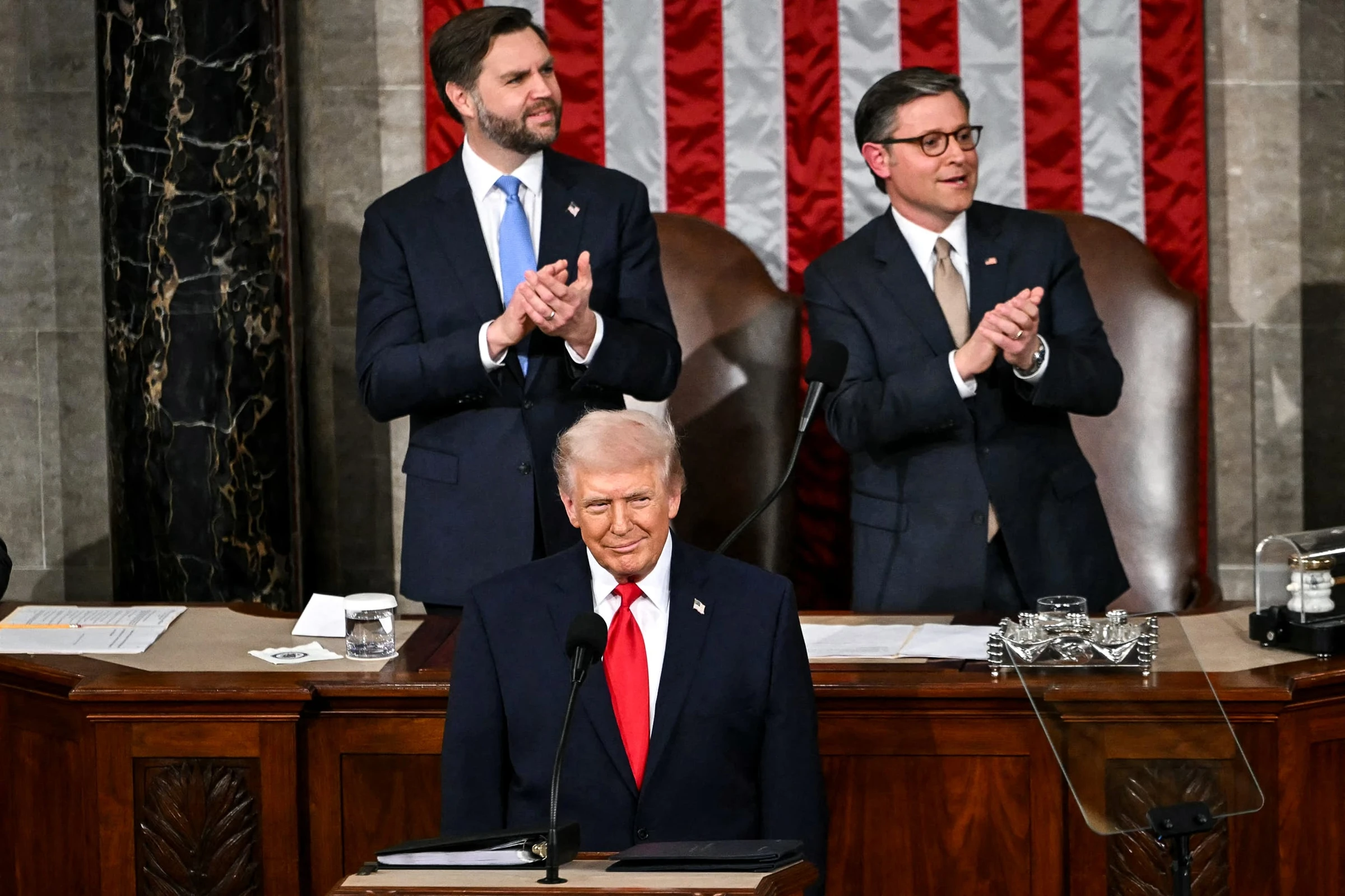
Trump's State of the Union Highlights Economic Turnaround
President Donald Trump delivered a record-setting State of the Union address lasting one hour and 47 minutes, during which he claimed to have overseen a significant turnaround in the U.S. economy and touted a secure border. The speech included attacks on Democrats, who he accused of being anti-American, and avoided contentious topics such as the Minnesota protests. In response, Democrats criticized the address as lacking real solutions to pressing national issues.
US Aerospace Firms Face Rare Earth Material Shortages
American aerospace and semiconductor companies are grappling with severe shortages of critical rare earth materials, particularly yttrium and scandium, sourced primarily from China. Despite recent trade agreements, the availability of these essential elements has plummeted, with shipments of yttrium to the U.S. dropping from 333 tons to just 17 tons following export controls. Prices for yttrium have surged by 60%, prompting some manufacturers to implement rationing and temporarily suspend operations.
US Tariff Rate to Rise Amid Legal Challenges
The U.S. tariff rate is set to increase to 15% or more for certain nations, according to U.S. Treasury Secretary Janet Greer. Following a Supreme Court ruling that struck down many of former President Donald Trump's import tariffs, FedEx has filed a lawsuit seeking refunds for tariffs it paid, joining over 1,000 companies in similar legal actions. The National Retail Federation has urged for a streamlined process to refund the tariffs, which have cost American households approximately $1,000 each in 2025.
Federal Judge Rules Against Trump's Swift Deportation Policy
A federal judge in Massachusetts, Brian Murphy, ruled that the Trump administration's policy allowing for the swift deportation of immigrants to third countries without prior notice is unlawful. The ruling mandates that the government must first attempt to deport individuals to their home countries or those specified by an immigration judge, and provide meaningful notice before any removals to third countries, allowing individuals to raise concerns about potential persecution or torture. This decision follows a case involving eight migrants who were incorrectly deported to Djibouti instead of South Sudan, and it highlights the administration's controversial deportation practices.